A plain guide for the Denver metro
Biohazard cleanup in Denver, explained before you call anyone
Blood, bodily fluids and sewage soak through carpet, pad and drywall in ways a mop never reaches. Here is what to do in the first hour, how trained crews contain and remove contamination, and the questions that separate them from everyone else.
This website is a draft preview. No phone line or request form is connected yet. In an emergency, call 911.
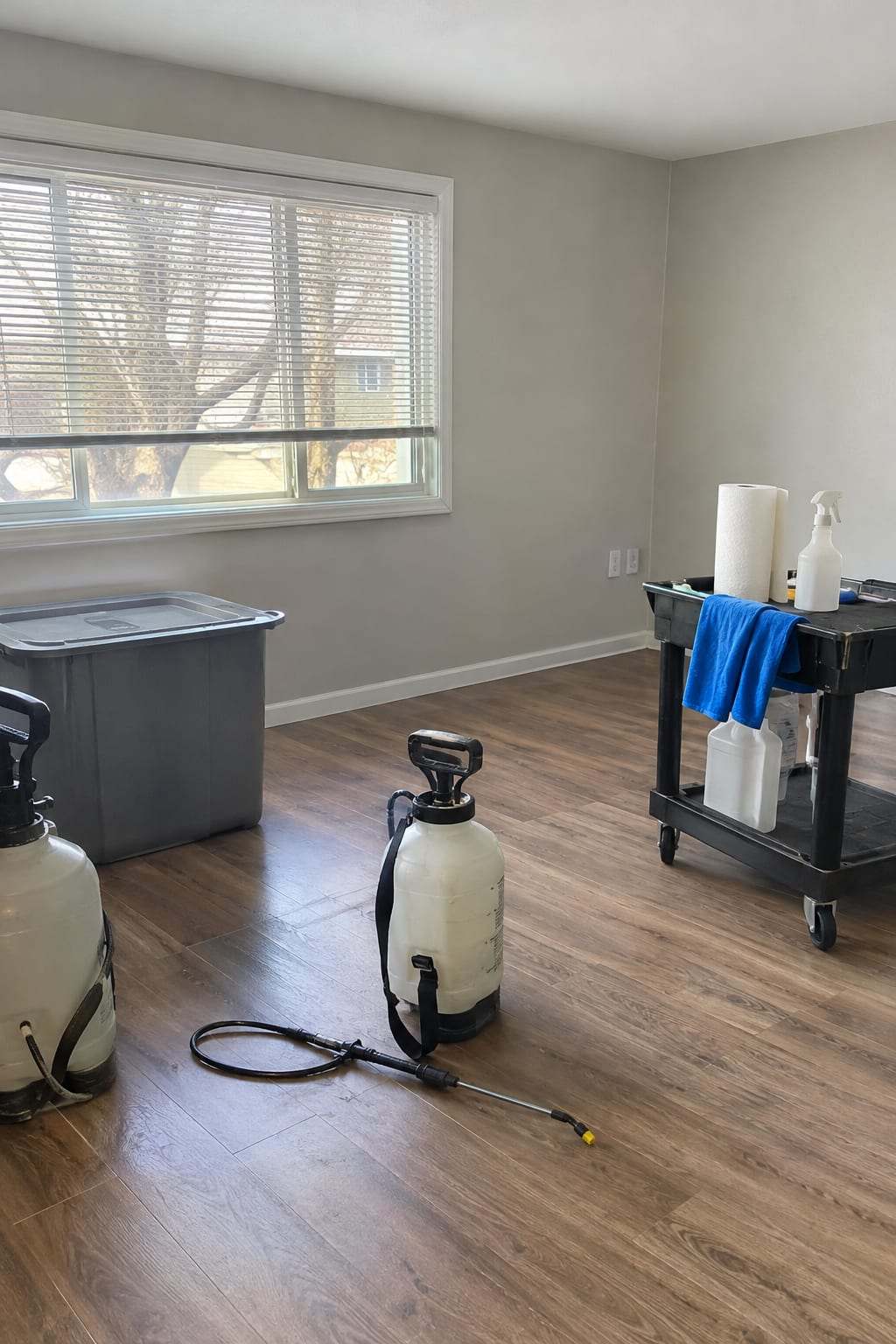
Containment first.
The affected area is kept separate from the rest of the home while it is cleaned and disinfected.
Before anyone arrives
The first hour
Four things to do, in order, while you are still deciding who to call.
If someone may be hurt or a crime may have occurred, call 911. Wait for police or the coroner to release the property before anything is moved.
Keep children, pets and visitors out of the affected room, and close the door if you can.
Do not wipe, scrub or vacuum blood or fluids without gloves and eye protection. Scrubbing pushes contamination deeper and wider.
Report what happened to your insurer before you agree to any work, then choose a provider you have checked.
Is it small enough to handle yourself? Work through the decision guide.
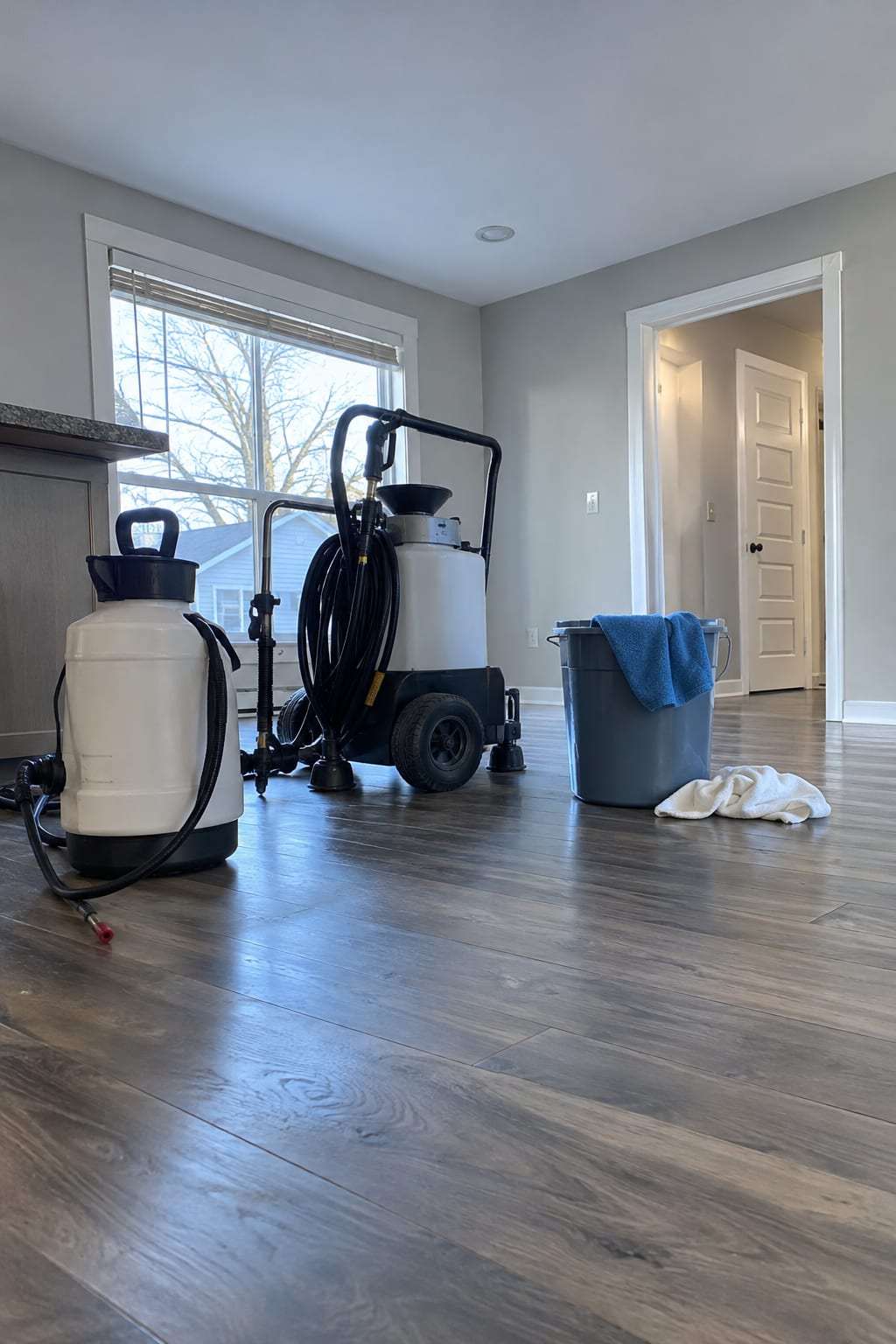
Why this is not a weekend cleaning job
Before anyone starts, ask which training each worker holds, such as OSHA bloodborne pathogens or 40-hour HAZWOPER, and ask to see the certificates.
-
Blood and other bodily fluids can carry hepatitis B, hepatitis C and HIV. They wick into carpet, pad, upholstery, mattresses, drywall and subfloor, well below the layer you can see or scrub.
-
Proper cleanup removes what absorbed the contamination, cleans and disinfects what stays, and sends regulated waste with a licensed transporter instead of the curbside cart.
-
These calls usually come on the worst day of someone's year. A good provider works quietly, keeps you informed and does not ask you to be in the room while the work happens.
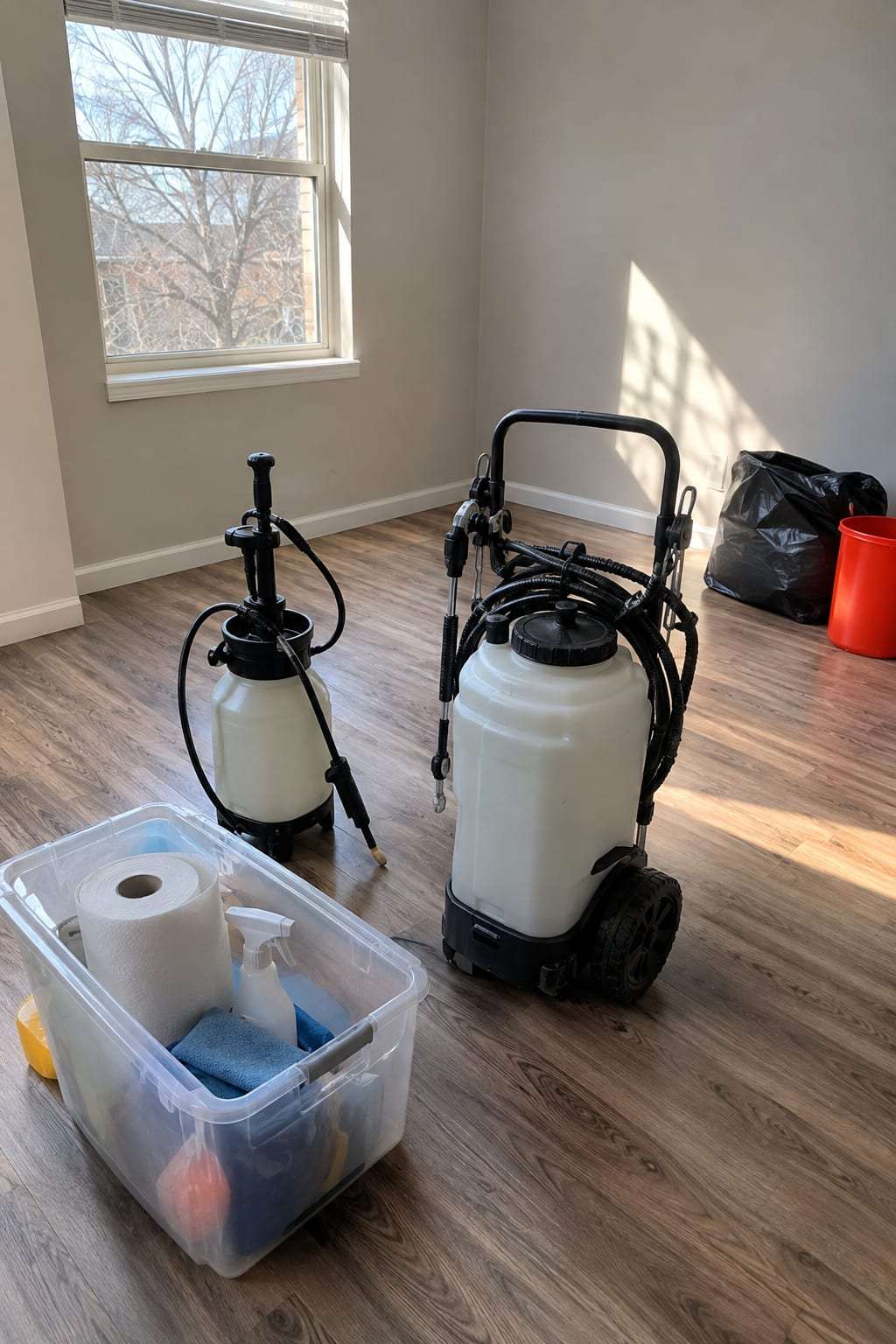
When it is beyond gloves and a bottle of bleach
- Blood or bodily fluids from an injury in a home, garage, vehicle or business, especially on carpet, fabric or unsealed wood.
- Sewage backing up into a finished basement, a restroom or any space people use.
- An unattended death, or a large dead animal, that has reached flooring or wall cavities.
- Needles, rodent nests or other biological waste mixed into a cluttered or hoarded home.
Surface cleaning hides what porous materials still hold. Removal, disinfection and documented disposal are the actual job.
The work itself
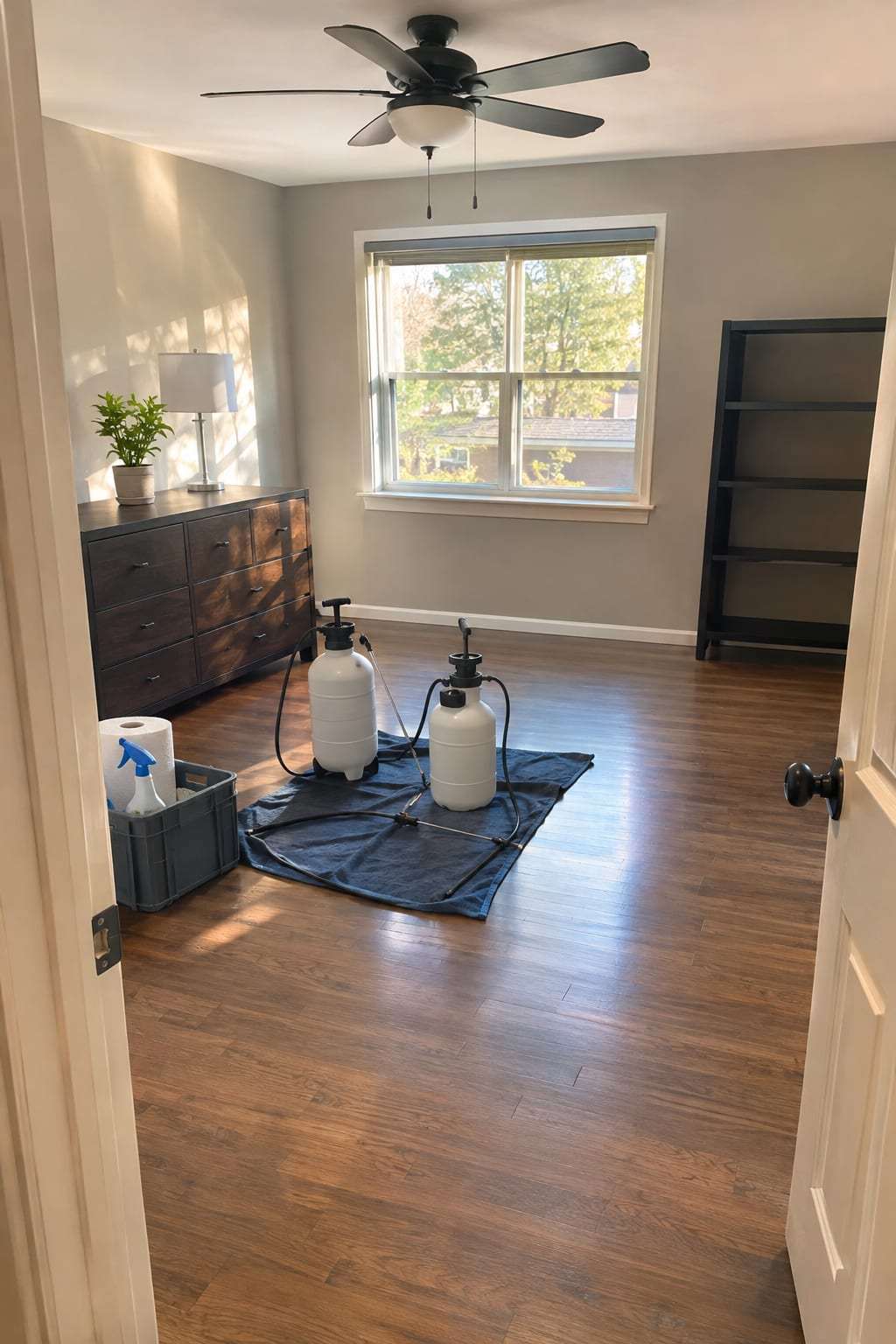
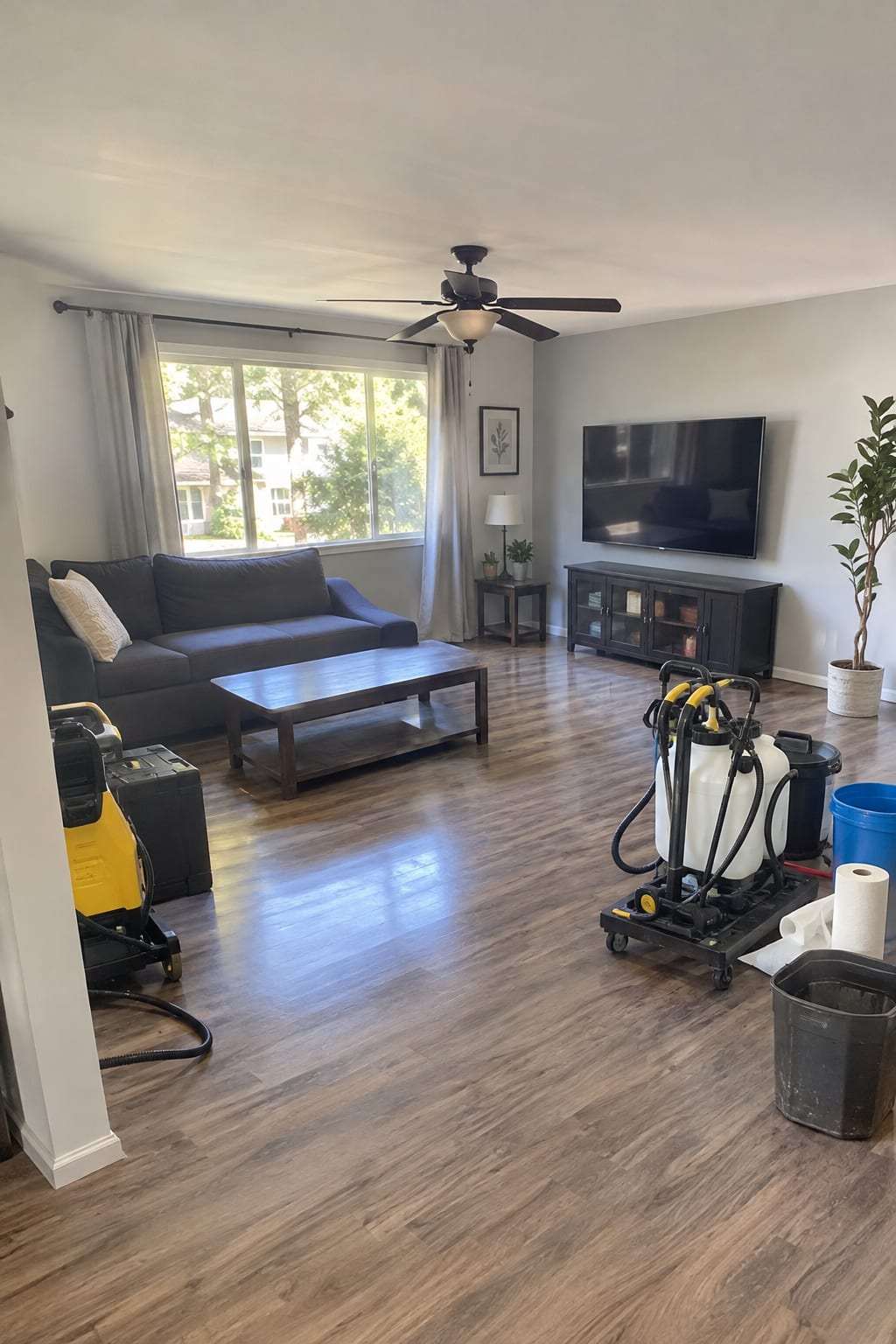
How a careful job usually runs
No two scenes are alike, so every job should begin with a written scope for your property, not a price quoted over the phone.
-
Assess
A technician traces how far the contamination traveled, including into pad, subfloor and wall cavities you cannot see.
-
Contain
The area is sealed with plastic sheeting, often with an air scrubber running, and the crew works in suits, gloves and respirators.
-
Remove
Porous materials that absorbed fluids are cut out, bagged and labeled as regulated waste for a licensed transporter.
-
Disinfect
Hard surfaces are cleaned first, then treated with a disinfectant registered for the hazard and left wet for its full contact time.
-
Restore
Removed flooring, drywall or trim is replaced so the room can be lived in again. Ask whether that is in the scope or a separate contract.
What a first call should sound like
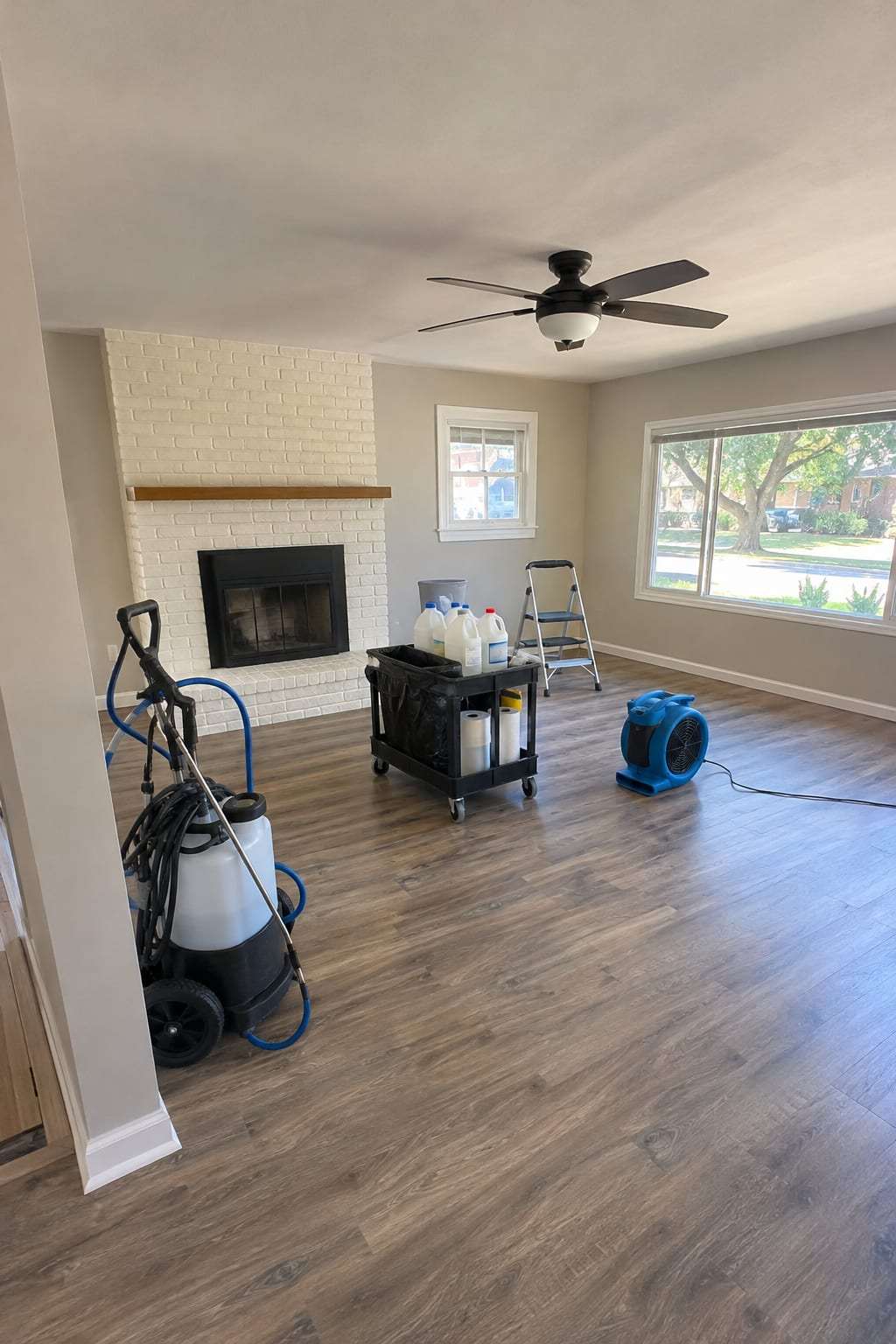
Expect a few direct questions: what happened, what kind of property it is and whether authorities have released it. Nobody should push you to decide on the phone. Ask for the next steps in plain words and a written scope before any work begins.
Whoever you call
Five questions that sort trained crews from the rest
A good provider answers each one plainly and puts the important answers in writing. Vague answers, or pressure to sign today, are reasons to keep looking.
- Training
- Which certificates does each worker on my job hold, such as OSHA bloodborne pathogens or 40-hour HAZWOPER, and can I see them?
- Disposal
- Which licensed transporter takes the regulated waste, where does it go, and what record will I receive?
- Scope
- What does the written scope include, and what is excluded, such as rebuilding flooring or drywall?
- Insurance
- Is the company insured for this work, and will it work directly with my adjuster?
- Proof of finish
- What will I be shown at the end so I know the room is clean and safe to use?
Across Denver, Arapahoe, Jefferson, Adams and Douglas counties
The same questions come up in Capitol Hill walk-ups, Aurora apartment communities, Lakewood ranches and Douglas County basements. A good first call starts with what happened and what kind of property it is, and a reputable company says plainly when a job is outside its scope.
Some contamination follows its own Colorado rules. Properties used to make methamphetamine must be decontaminated by contractors certified under the Colorado Department of Public Health and Environment's program. This guide does not cover that work.
- Ask which training each worker holds for this kind of contamination, and ask to see it.
- Ask which licensed transporter carries the regulated waste and where it goes, then ask for the disposal records.
- Read your homeowners, renters or commercial policy. Some cover biohazard cleanup, depending on the cause.
- Confirm the coroner or medical examiner and the county agencies for your own address. Boundaries across the metro are not always obvious.
Privacy and care
You should be able to talk to a person, not a script. Ask who will see the details of what happened; they belong only with the people doing the work or handling an insurance claim. Ask whether arrival and parking can be arranged to draw as little attention from neighbors as practical.
ZIP codes served: 80203 (Denver), 80218 (Denver), 80202 (Denver), 80205 (Denver), 80206 (Denver), 80204 (Denver), 80209 (Denver), 80211 (Denver), 80223 (Denver), 80216 (Denver), 80220 (Denver), 80246 (Denver), 80207 (Denver), 80212 (Denver), 80219 (Denver), 80214 (Denver), 80210 (Denver), 80230 (Denver), 80224 (Denver), 80221 (Denver), 80222 (Denver), 80266 (Denver), 80226 (Denver), 80238 (Denver), 80247 (Denver), 80010 (Aurora), 80232 (Denver), 80110 (Englewood), 80113 (Englewood), 80236 (Denver), 80033 (Wheat Ridge), 80030 (Westminster), 80231 (Denver), 80215 (Denver), 80003 (Arvada), 80002 (Arvada), 80045 (Aurora), 80227 (Denver), 80229 (Denver), 80237 (Denver), 80012 (Aurora), 80235 (Denver), 80239 (Denver), 80260 (Denver), 80004 (Arvada), 80014 (Aurora), 80123 (Littleton), 80249 (Denver).
Also nearby: 80121, 80031, 80120, 80111, 80011, 80228, 80005, 80122, 80233, 80017, 80419, 80640, 80234, 80021, 80015, 80013, 80112, 80241, 80128, 80129, 80401, 80022, 80126, 80020, 80007, 80453, 80465, 80130, 80124, 80454, 80018, 80019, 80602, 80023, 80016, 80127, 80457, 80125, 80601, 80131, 80403, 80026, 80134, 80137, 80108, 80516.
Go deeper, one decision at a time
Guides, tools and service area notes for what comes after a hard day.
Guides18
- After an unattended death at home: what the first days usually look like
- Why blood on carpet rarely stops at the carpet
- Bloodborne pathogens, explained without the jargon
Questions people ask first
Short answers here. More concerns, answered plainly.
Can I clean up blood myself?
A small amount on tile, sealed stone or a countertop, yes, with gloves and a disinfectant whose label lists bloodborne pathogens. Anything soaked into carpet, upholstery, a mattress or unsealed wood belongs with a trained crew.
Will my insurance cover biohazard cleanup?
Sometimes. Homeowners, renters and commercial policies differ, and the cause matters. Call your insurer or agent before you sign anything, and keep every receipt.
Do I need to be there during the cleanup?
Usually not. Many families hand over access through a relative, landlord or property manager. Ask to be called when the work is finished and the room is ready to see.
Where do contaminated materials go?
Into sealed, labeled containers carried by a licensed transporter to an approved facility, never into household trash or a rented dumpster. Ask for the disposal paperwork.
Is meth lab cleanup the same thing?
No. In Colorado, meth lab decontamination requires a contractor certified under a specific state program, and this guide does not cover it. The Colorado Department of Public Health and Environment keeps the list of certified contractors.
Can the work be done discreetly?
Usually. Ask about arrival times, vehicle markings, where vehicles will park and who the crew will speak with on site.
Send a private message
This form is not connected. This website is a draft preview: no business has been confirmed to receive requests, so the fields below are switched off and nothing can be sent. In an emergency, call 911.
Start with safety. Hire with questions.
Call 911 first if someone may be hurt or a crime may have occurred. Then keep others out of the room, call your insurer, and hire a trained provider who answers plainly and puts the scope in writing.